Light Green Thailand Electric City Bike 16 5Ah Lithium Battery 250W
This is a 27.5 inch aluminum city bike built around a 36V 16.5Ah downtube battery and a 250W rear hub motor, listed at $750.00 per piece for orders of 1-19 pieces. It suits fleet buyers, dealers and rental operators who want a low-complexity bike that a local mechanic can service with standard tools and locally stocked parts. The trade-off is deliberate: rear hub drive and an external 8 speed drivetrain keep the repair path simple, but three-year cost is decided by what you replace and how often, not by the purchase price alone.
At a glance
- Three-year ownership cost on this bike is dominated by consumables such as tyres, brake pads and one chain-and-cassette set, not by the $750.00 piece price.
- A rear hub motor carries no belt, no internal gear oil and no crank-bearing service tied to the drive, so routine work stays at wheel and brake level.
- The 36V 16.5Ah pack is the largest single replacement line you should price now, because capacity fades well before the frame or motor wears out.
- The title and the specification table disagree on both the battery figure and the model code, so confirm the exact variant in writing before you build a spares list.
Trade terms
- Price
- $750.00/pieces 1-19 pieces
- Supply Ability
- 3000 Piece/Pieces per Month
Full specifications
Supplier listing data has been normalised into one reference table. Values are shown as listed; confirm every field in the final quotation and specification sheet.
| Parameter | Listing value |
|---|---|
| Model Number | EC-07 |
| Gears | 8 SPEED |
| Range Per Power | 60 Km |
| Frame Material | Aluminum Alloy |
| Wheel Size | 27.5” |
| Max Speed | <30km/h |
| Voltage | 36V |
| Power Supply | Lithium Battery |
| Braking System | F/R Hydraulic Disc Brake |
| Torque | 50NM, Central Torque System |
| Charging Time | 5-6 HOURS |
| Motor Position | Rear Hub Motor |
| Battery Position | Down Tube |
| Battery Capacity | 16.5Ah |
| Smart Type | Electronic |
| Fork | ALLOY SUSPENSION |
| Handlebar | Alloy Handle Joint |
| Speed | Shimano ARDTX800 8Speed Cassette |
| Seat | Selle Royal |
| Gross Weight | 25KGS |
| Net Weight | 23.1KG |
| Package Size | 1440x270x870mm(85%) |
| High Light | Light Green 250w Electric City Bike, 50NM Electric City Bike, Electric City Bike Aluminum Alloy |
| Model | EC-05 |
Verdict
Buy this bike if your three-year question is what will I replace and can I buy it locally rather than what is the lowest sticker price. The $750.00 per-piece figure for 1-19 pieces buys an aluminum frame, front and rear hydraulic discs, an 8 speed drivetrain and a 36V 16.5Ah downtube pack, and every wearing part sits on a widely stocked platform. The maintenance profile is therefore predictable: pads, chain, cassette, tyres and one battery. What is not predictable is the battery, because neither a cycle rating nor a replacement price appears in the listing. Resolve the EC-07 and EC-05 model conflict in writing first, then price a replacement pack before you commit.
What we like
- Consumables sit on a standard 8 speed and disc brake platform, so pads, chains and cassettes can be sourced locally instead of through one distributor.
- A rear hub motor removes the belt, oil and crank-bearing service routines that mid-drive units add to a three-year maintenance schedule.
- The downtube battery detaches for indoor charging and cool storage, which is the simplest available way to slow capacity loss in a hot climate.
- Hydraulic discs front and rear self-adjust as pads wear, cutting the cable-tension adjustments that mechanical brakes demand on a heavier city bike.
- An aluminum frame and alloy suspension fork avoid the rust touch-ups a steel frame needs in humid coastal cities, lowering bodywork cost across three years.
What to watch
- Two model codes appear in the same table, EC-07 and EC-05, and a spares order placed against the wrong one will not fit the frame you receive.
- The title reads 16 5Ah while the specification table states 16.5Ah, and the table is the figure to trust when you model battery replacement cost.
- No ingress protection rating is published for the motor or the pack, which leaves wet-weather duty, and the corrosion risk it carries, unpriced in your model.
- A net weight of 23.1KG with 27.5 inch wheels makes roadside tube changes slow and adds labour minutes behind every puncture in a working fleet.
How it performs
- motor
- The 250W rear hub motor keeps maintenance at wheel level: no belt, no internal gear oil and no crank-bearing work tied to the drive. The listing also quotes 50NM through a central torque system, which reads as a bottom-bracket torque sensor feeding the controller rather than a mid-drive unit, and that pairing usually delivers smoother assist and less drivetrain shock than a cadence-only sensor. Verify which sensor is actually fitted, because a cadence sensor changes how the bike behaves under load and how quickly you wear through chains and cassettes.
- battery
- The 36V 16.5Ah downtube pack is the largest single ownership cost after purchase, and the listing stops short of cell chemistry, rated cycles and replacement price. Charging time is quoted at 5-6 hours, which suits overnight charging and treats cells more gently than fast charging does. Downtube mounting keeps the pack removable for indoor charging and cool storage, which matters in hot climates where a full pack left in the sun loses capacity faster. Ask for the rated cycle count and the replacement pack price in writing before you budget.
- braking
- Front and rear hydraulic disc brakes are the right match for a 23.1KG bike in stop-start traffic, and they are not costly to own if the service is planned. Pads are the recurring item; fluid bleeds are infrequent but need a bleed kit or a workshop, and that tooling is the real cost difference against mechanical discs. Hydraulic systems self-adjust as pads wear, so you spend less labour on cable tension over three years. Confirm that replacement pads for this caliper are stocked in your market before you commit to a fleet.
- comfort
- A Selle Royal saddle, an alloy suspension fork and 27.5 inch wheels set this up as an upright city ride rather than a sporty one, and comfort affects maintenance because a rider who stays comfortable stops forcing the bike over kerbs and potholes. The 23.1KG net weight is the number to watch: it is manageable on the move but heavy to lift onto a rack and heavier still during a roadside tube change. Tyre choice and rim condition affect your long-term running cost more than the saddle does.
- drivetrain
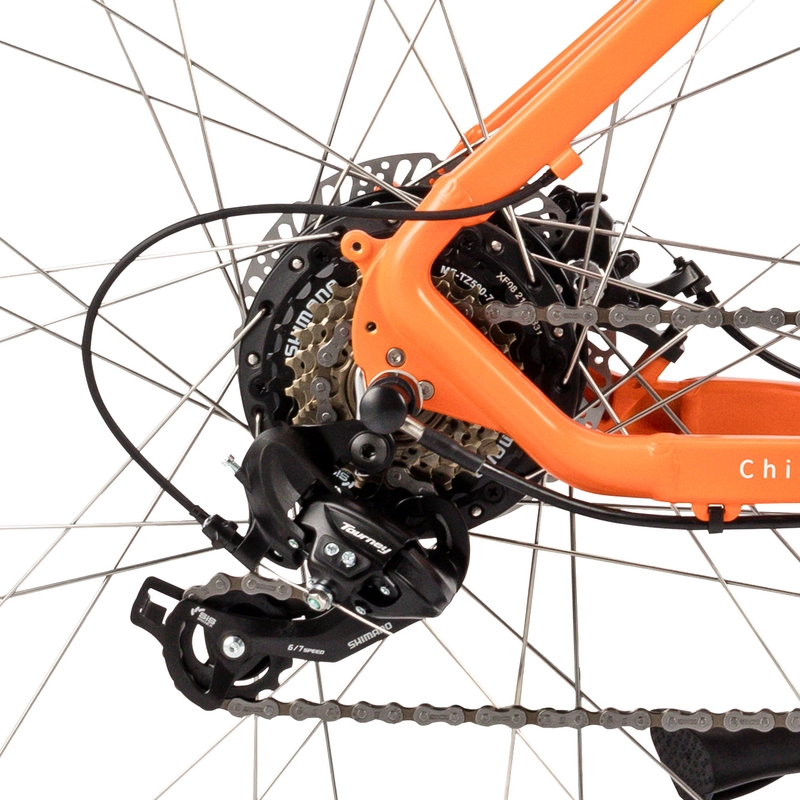
- The 8 speed cassette and Shimano derailleur are the parts you will replace most often, and 8 speed consumables are widely stocked and lower priced than 11 or 12 speed equivalents. Chain stretch drives the whole schedule: check it monthly and replace the chain early to protect the cassette. The listing code suggests a trail-oriented 8 speed group, so confirm the exact derailleur and cassette ratio in writing before ordering spare chains, because chain width must match the cassette and a mismatch wears both.
Who should buy it
- Fleet buyers who need a low-complexity city bike that local mechanics can service without brand-specific diagnostics or proprietary tooling.
- Dealers and rental operators who already hold 8 speed Shimano consumables and want one more platform drawing on the same stock.
- Riders in humid or coastal cities who value an aluminum frame and a removable pack they can carry indoors.
- Buyers who plan a three-year consumables budget and want the battery replacement cost quoted before the order is placed.
Who should skip it
- Operators who need published ingress ratings and a documented battery cycle life before they can approve a purchase internally.
- Riders who regularly carry a bike up stairs or onto trains, because a 23.1KG net weight turns every lift into a two-handed job.
- Buyers who want a mid-drive motor for steep terrain, since a 250W rear hub with a 60 Km range figure is tuned for city duty.
Specifications
Full specification table and product data are shown above.
Frequently asked questions
What will this bike actually cost to maintain over three years?
Budget for consumables rather than repairs. On a city bike used daily within a 60 Km range envelope, expect tyres, tubes, brake pads, at least one chain-and-cassette replacement and probably one hydraulic brake bleed inside three years. None of those parts are proprietary, so the cost tracks your local labour rate more than part prices. The unpredictable line is the battery, which is the largest single item in a three-year total, and the listing gives no cycle-life figure to model it from.
How long should the 36V 16.5Ah battery last, and what does replacement involve?
The listing publishes capacity but no cycle rating, so treat service life as unconfirmed rather than assume a number. What you can control is treatment: charge overnight across the stated 5-6 hours, avoid leaving a full pack in direct sun, and remove the downtube battery for storage in hot workshops. Those habits slow capacity fade noticeably. Before ordering, ask the supplier for the cell brand, the rated cycle count and the price of a replacement downtube pack, because that last figure belongs in your three-year model.
Why does the listing show both EC-07 and EC-05, and a title that reads 16 5Ah?
The title appears to have lost a decimal point in spacing, and the specification table states 16.5Ah, so trust the table over the title when you size the battery and price a replacement. The model conflict is more serious: the parameter row says EC-07 while a second model field says EC-05. Do not assume frame, battery mount and controller spares are interchangeable across those codes. Ask for one confirmed model code in writing on the quotation and the invoice before you build a spares list.
Does a central torque system mean this is a mid-drive motor?
No. The specification table places the motor at the rear hub and lists a central torque system separately, which reads as a bottom-bracket torque sensor measuring your pedal input and signalling the rear controller. That arrangement gives more natural assist than a cadence-only sensor because output follows pedal pressure rather than pedal movement. Confirm the sensor type in writing, because the two behave differently under load and a cadence sensor tends to wear the drivetrain faster on hills and standing starts.
Are hydraulic disc brakes more expensive to own than mechanical ones?
The pads cost about the same and last comparably, so the real difference is tooling and labour. Hydraulics need an occasional fluid bleed with a bleed kit or a workshop visit, while mechanical brakes need periodic cable tension and cable replacement that a rider can usually handle alone. Against that, hydraulic systems self-adjust as pads wear and hold consistent lever feel on a 23.1KG bike in traffic. For a fleet, the deciding factor is whether your service partner already stocks the pads and bleed kit for this caliper.
How much of the routine work can a non-specialist team do in house?
Tyre and tube changes, pad replacement, chain wear checks and drivetrain cleaning are all realistic in house with basic tools, and those tasks cover most of the three-year consumable list. What needs planning is the hydraulic bleed and any controller or sensor diagnosis, both of which need either a trained technician or a service partner. Note that the package size is quoted as 1440x270x870mm at 85 percent, so final assembly and a safety check sit on your side and should be costed as receiving labour.
What should I verify in writing before placing a 1-19 piece order at $750.00?
Ask for one confirmed model code, the confirmed battery capacity, the cell brand and rated cycles, the replacement pack price, the exact derailleur and cassette ratio, and the pad reference for the fitted calipers. Request the sensor type and any available ingress rating for the motor and pack. Certification depends on the actual product model and target market. Confirm the 85 percent packing arrangement and who performs final assembly, since that determines your receiving cost and your liability position on the first ride.