
27 5 Inch Fat Tire Electric Dirt Bikes Brusshless Motor Hidden
This is a 36 V, 250 W mid-drive electric bike listed as EC-01, EC-02, and EC-03, with a 25 km/h maximum speed and a 27 KG to 28 KG net weight. It suits a rider who needs a low-speed two-wheeler stored in a hallway, shed, or vehicle bay and moved only occasionally with help. The trade-off is that the travel story is weaker than the title suggests: no folded dimensions, hinge, or latch are stated, so storage planning must start from the 1420*250*950MM carton and the assembled weight.
At a glance
- Treat this page as a storage and transport check first: the listing shows a 27 KG to 28 KG machine but no folded dimensions, hinge, or latch specification.
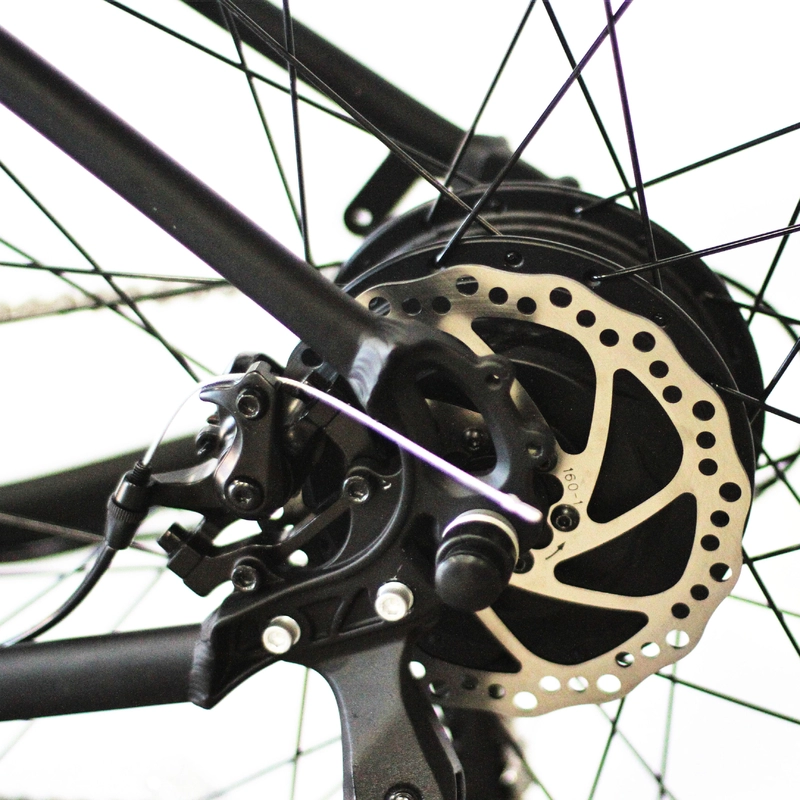
- The title's 27.5 inch fat tire and hidden battery claims conflict with the 700C tire size and rear carrier or downtube battery location in the spec table.
- Trust the spec table for measurable fit and power data, then ask the supplier to confirm tire marking, folded envelope, and battery removal before you plan around it.
- At 250 W and 25 km/h, this is a low-speed utility platform rather than a dirt bike, so match it to flat storage, short lifts, and paved or light-path use.
Trade terms
- Price
- $980.00/pieces 1-19 pieces
- Supply Ability
- 3000 Piece/Pieces per Month
Full specifications
|
Model
|
EC-01
|
EC-02
|
EC-03
|
|
Speed class
|
5
|
5
|
5
|
|
Mileage per charge
|
60
|
60
|
60
|
|
Trame material
|
Alloy
|
Alloy
|
Alloy
|
|
Tire size
|
700C
|
700C
|
700c
|
|
Maximum speed
|
25km/h
|
25km/h
|
25km/h
|
|
Voltage
|
36v
|
36v
|
36v
|
|
Power supply
|
Lithium Battery
|
Lithium Battery
|
Lithium Battery
|
|
Braking System
|
Mechanical disc brake
|
F/R hydraulic disc brake
|
F/R hydraulic disc brake
|
|
Torque
|
80nm
|
80nm
|
80nm
|
|
Charging time
|
5 hours
|
5 hours
|
5 hours
|
|
Engine position
|
central
|
central
|
central
|
|
Battery location
|
rear carrier
|
downtube
|
downtube
|
|
Battery capacity
|
11AH
|
13.2AH
|
16.5AH
|
|
Gross weight
|
28.1kgs
|
30kgs
|
30kgs
|
|
Net weight
|
27KG
|
28KG
|
28KG
|
|
Package Size
|
1420*250*950MM (85%)
|
1420*250*950MM (85%)
|
1420*250*950MM (85%)
|
|
Power(Customization available)
|
250w
|
250w
|
250w
|
|
Color(Customization available)
|
Black
|
Green
|
Blue
|
What it is
Most listings on this platform begin with the motor, but the EC-01, EC-02, and EC-03 are better approached from the doorway, the stairwell, and the back of a vehicle. The assembled machine is listed at 27 KG to 28 KG net and 28.1 KG to 30 KG gross, which is light enough for one strong adult to wheel on flat ground and heavy enough that a one-person lift into a high boot or onto a wall hook deserves a second pair of hands. The listing gives a package size of 1420*250*950MM at 85 percent, but it does not give a folded length, width, or height. That omission matters more than motor claims if storage is your reason for shortlisting it.
The page title is the first thing to reconcile, because it promises a 27.5 inch fat tire electric dirt bike with a hidden brushless motor, while the specification table records 700C / 700c tires, a 250 W power rating, a 25 km/h maximum speed, and battery locations at the rear carrier or downtube. Those are not cosmetic differences. A 27.5 inch fat tire and a 700C tire do not describe the same bead-seat diameter, and a rear-carrier battery is not hidden in the frame. For fit, gearing, and replacement parts, trust the specification table and treat the title as loose keyword copy until the supplier confirms the tire sidewall marking, battery position, and motor placement.
The three model codes are not just color options. The table ties EC-01, EC-02, and EC-03 to 11 AH, 13.2 AH, and 16.5 AH battery capacities, to mechanical or F/R hydraulic disc brakes, and to 27 KG or 28 KG net weights, so the variant changes the lift and the charging routine. A rear-carrier battery is easier to remove for hallway charging but adds awkward mass at the back when you tilt the bike through a door; a downtube battery keeps weight lower and central but may need the bike close to a socket. Before storage planning, ask which battery location belongs to each code, whether the battery locks and removes with a key, and whether the charger travels.
Key questions, answered
Does this bike fold for storage or transport?
The listing does not state that the EC-01, EC-02, or EC-03 has a folding frame, hinge, latch, or folded dimensions, and the page title does not use the word folding. That matters because a 27 KG to 28 KG assembled bike is not a compact package by default, and a frame hinge is a structural and safety component that should be documented rather than assumed. If folding is essential, ask the supplier for the folded length, width, and height, the hinge manufacturer and load rating, and whether the handlebar or pedals fold. If those answers are not specific to the model code you are buying, plan storage around the assembled footprint and the 1420*250*950MM carton instead.
The title says 27.5 inch fat tire, but the table says 700C. Which should I trust?
The title and the specification table describe different wheel systems, so you should not order on the title alone. A 27.5 inch fat tire uses a 584 mm bead-seat diameter and a wide casing, while 700C uses a 622 mm bead-seat diameter; they are not interchangeable, and the frame clearance, brake alignment, and mudguard fit all change with the actual wheel. The table lists 700C / 700c twice, which is the more specific and repeated figure, so treat 700C as the working assumption until the supplier sends a photograph of the tire sidewall and confirms the fitted tire width. If fat tires are central to your use case, ask for the exact tire model, width, and clearance in writing before you pay.
The title says hidden battery, but the table lists rear carrier or downtube. What does that mean for lifting and charging?
The word hidden in the title is not supported by the battery location field, which lists rear carrier / downtube. A rear-carrier battery sits behind the rider and is usually removable for charging, but it shifts mass rearward and makes the bike more awkward to lift over a step or swing into a narrow storage slot. A downtube battery keeps mass lower and more central, which helps when you wheel the bike, but it may be exposed to kerb strikes and may need the frame close to a power socket. Ask the supplier which location applies to each of EC-01, EC-02, and EC-03, whether the pack locks to the frame, and whether the key is removable with the battery. Those answers affect daily storage more than the title slogan does.
Frequently asked questions
How heavy is it to move, and what does the package size tell me?
At 27 KG to 28 KG net and 28.1 KG to 30 KG gross, this is a two-handed object for most riders, especially when the battery is installed and the front wheel is turned. The carton measures 1420*250*950MM at 85 percent, which suggests a long and relatively narrow pack rather than a cube, so a car boot, van slot, or hallway cupboard needs that length plus clearance for your hands and the handlebar. Check the door width, lift threshold, and any stair turn before delivery. If you plan to carry it on a vehicle rack, confirm the rack's per-bike weight limit and whether the rack arms can clamp a frame of this shape without putting load on the battery or cables.
Which variant, EC-01, EC-02, or EC-03, should I choose for travel and storage?
For storage and travel, the variant choice is mostly about battery capacity and brake type, because the table pairs EC-01, EC-02, and EC-03 with 11 AH, 13.2 AH, and 16.5 AH packs and with mechanical or F/R hydraulic disc brakes. A larger pack can mean more charging intervals between trips, but it also adds mass and may change the balance point when you lift the bike; hydraulic brakes can reduce hand effort on repeated descents but add fluid and bleed procedures that matter if the bike sits for long periods. Ask the supplier to map each code to its exact battery capacity, brake set, and net weight, then choose the lightest combination that covers your real trip length rather than the largest number in the table.
Is 250 W and 25 km/h enough for a bike labelled as a dirt bike?
The dirt bike label is the least reliable phrase in the title. The table gives 250 W and a 25 km/h maximum speed, with a 36 V lithium battery and a central engine position, which reads as a low-speed utility or city platform rather than a competition off-road machine. That does not make it useless; it makes the intended use narrower. On pavement, gravel paths, and short errands, 250 W and 25 km/h can be coherent, especially with 80 Nm of torque and a central engine position in the table. On steep loose climbs, deep mud, or jump lines, the power and speed figures are modest and the 27 KG to 28 KG weight becomes a handling burden. Match the bike to the terrain you actually ride.
What should I check before putting it on a car rack or carrying it upstairs?
Before you commit to a rack or an upstairs room, measure three things: the assembled length from front tire to rear carrier, the width across the handlebar, and the weight you can lift with one hand at the balance point. Then compare those figures with your door frames, stair landing, and rack per-bike limit. The listing gives a carton of 1420*250*950MM and a gross weight of 28.1 KG to 30 KG, but it does not give an assembled turning circle or a folded envelope, so a cardboard template is more useful than a guess. Ask the supplier for the wheelbase, handlebar width, and whether the battery must be removed before lifting; those details decide whether the bike lives in a hallway or a shed.
What does speed class 5 mean, and is it legal where I ride?
The table lists speed class 5, but it does not define what that class means in your jurisdiction, and a class label is not a substitute for local road law. The same machine can be treated differently depending on whether it is sold as a pedal-assisted bicycle, a moped, or an off-road vehicle, and the 25 km/h maximum speed and 250 W rating may or may not keep it inside a low-speed category where you ride. Ask the supplier for the specific market configuration, the brake and lighting specification, and the documents that apply to that configuration. Certification depends on the actual product model and target market. Confirm registration, insurance, helmet, and path-access rules with your local authority before you ride.
How should I read the 60 mileage per charge and 5 hours charging time?
The range and charging figures need a unit check before you plan trips. The table lists mileage per charge as 60 with no unit, and charging time as 5 hours, so you should ask whether 60 means kilometres, miles, or a test-cycle figure, and whether the 5 hours applies to the 11 AH, 13.2 AH, or 16.5 AH pack. Those differences change how often the bike must return to a socket and whether a second charger is worth buying. For storage, a removable battery that charges away from the bike is more flexible than a fixed pack, but only if the lock and connector are designed for repeated removal. Confirm the charger voltage and plug type for your market.