Aluminum Frame 27 5 Inch Kids Adults Electric Bike
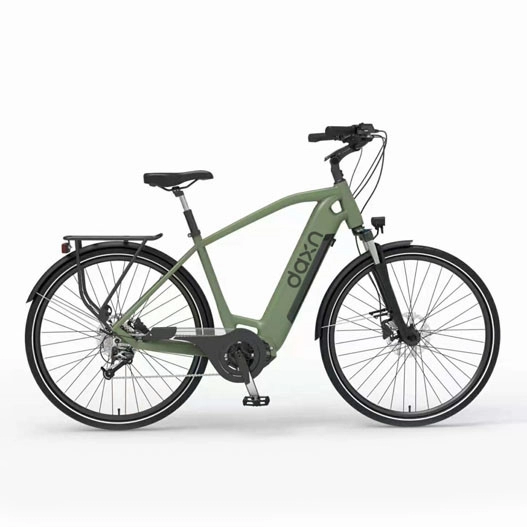
This is a 250 W mid-drive city and road e-bike sold in three battery and brake variants, and the decisive question is what it legally is where you will ride it. It suits an adult commuter who wants a 25 km/h pedal-assist machine with a listed 700C wheel size and a choice of 11 Ah to 16.5 Ah packs. The trade-off is a listing that reuses one specification table across several contradictory titles, so wheel size, throttle behaviour and variant pricing have to be confirmed in writing.
At a glance
- The title promises 27.5 inch wheels while the specification table says 700C, so confirm the ETRTO marking before assuming either geometry.
- Speed class 5 has no universal legal meaning, so the defensible figures on this page are 250 W of power and a 25 km/h ceiling.
- Battery capacity spans 11 Ah, 13.2 Ah and 16.5 Ah, and the 60 km mileage figure should be tested against the smallest pack first.
- Mechanical and hydraulic disc brakes are both listed, and net weight moves from 27 kg to 28 kg across variants that need separate pricing.
Trade terms
- Price
- $980.00/pieces 1-19 pieces
- Supply Ability
- 3000 Piece/Pieces per Month
Full specifications
|
Model
|
EC-01
|
EC-02
|
EC-03
|
|
Speed class
|
5
|
5
|
5
|
|
Mileage per charge
|
60
|
60
|
60
|
|
Trame material
|
Alloy
|
Alloy
|
Alloy
|
|
Tire size
|
700C
|
700C
|
700c
|
|
Maximum speed
|
25km/h
|
25km/h
|
25km/h
|
|
Voltage
|
36v
|
36v
|
36v
|
|
Power supply
|
Lithium Battery
|
Lithium Battery
|
Lithium Battery
|
|
Braking System
|
Mechanical disc brake
|
F/R hydraulic disc brake
|
F/R hydraulic disc brake
|
|
Torque
|
80Nm
|
80Nm
|
80Nm
|
|
Charging time
|
5 hours
|
5 hours
|
5 hours
|
|
Engine position
|
central
|
central
|
central
|
|
Battery location
|
rear carrier
|
downtube
|
downtube
|
|
Battery capacity
|
11AH
|
13.2AH
|
16.5AH
|
|
Gross weight
|
28.1kgs
|
30kgs
|
30kgs
|
|
Net weight
|
27KG
|
28KG
|
28KG
|
|
Package Size
|
1420*250*950MM (85%)
|
1420*250*950MM (85%)
|
1420*250*950MM (85%)
|
|
Power(Customization available)
|
250w
|
250w
|
250w
|
|
Color(Customization available)
|
Black
|
Green
|
Blue
|
What it is & who it is for
Road legality is the organising question for this listing, not frame material or colour. A 250 W motor with a 25 km/h cutoff can sit inside pedal-cycle rules in several markets, but that outcome depends on behaviour the specification table does not describe: whether assistance stops when pedalling stops, whether a throttle can drive the bike without pedalling, and whether the controller can be reconfigured. The title adds 'Kids Adults', which is implausible for a 700C machine with a 27 kg net weight, so treat that phrase as search-term padding rather than a statement about fit. Ask the seller to describe the assist logic in writing before you treat the bike as a bicycle.
What the table does support is a 36 V system, a central motor rated 250 W, 80 Nm of torque, 25 km/h maximum speed and 700C tyres. Those numbers describe a European-style pedelec architecture, and the central motor position is the part that distinguishes it from the hub-drive listings that share the same table. The conflicts matter more than the headline. Speed class 5 is not a category most regulators recognise, the 27.5 inch wheel in the title cannot coexist with the 700C tyre in the table at the same frame, and the 60 km mileage has no unit attached. Each of those is a question to put to the supplier, not a defect to assume.
This page is written for the buyer who needs a road-legal commuter and is prepared to document it, not for the buyer shopping a 750 W dirt bike or a first bicycle for a child. If you are importing more than a sample, the documents that decide the shipment are the same ones that decide the ride: a declaration for the exact model, a test summary for the 250 W drive and the 25 km/h cutoff, and a battery transport report. Certification depends on the actual product model and target market. Where those documents do not exist for the variant you want, the cheaper 11 Ah model is not a bargain; it is an unresolved customs and insurance question.
Key specs explained
- Model: EC-01 / EC-02 / EC-03
- Three model codes share one specification sheet, which tells you the differences live in the battery, the brake set and a kilogram of weight rather than in the frame. Before you compare prices, ask which code maps to which battery capacity and which brake type, because a quotation that names only EC-01 is not a quotation you can audit. Variant discipline is what separates a procurement order from a sample purchase, and it also determines the spare parts you will need to stock.
- Tire size: 700C / 700c
- The table lists 700C twice with different capitalisation, a sign of copy-paste rather than engineering care. 700C is a 622 mm bead-seat diameter, so it takes road and gravel tyres, not the 584 mm 27.5 inch tyres named in the page title. Ask for a photograph of the tyre sidewall showing the ETRTO size and for the frame clearance in millimetres. If the seller cannot reconcile the two, order a single sample and measure it before committing to a container.
- Maximum speed: 25km/h, speed class 5, power 250w
- The 25 km/h figure and the 250 W rating are the two numbers that make this bike arguable as a pedal cycle in markets that follow the European pedelec model. Speed class 5 does not carry that meaning on its own and should not be quoted in a customs entry or an insurance application. Ask for the cutoff behaviour in writing: assistance must cease when pedalling ceases and must not be adjustable by the rider. Power is listed as customisation available, so confirm the rating on the unit you actually buy.
- Voltage: 36v, battery capacity 11AH / 13.2AH / 16.5AH
- At 36 V, the three packs hold roughly 396 Wh, 475 Wh and 594 Wh, and that arithmetic is more useful than the mileage claim. The smallest pack is a short urban commute; the largest is the one to specify if your route has hills or headwinds. Ask whether the cells are the same chemistry and brand across variants, whether the pack is removable, and what the charger input voltage is for your destination. A 5 hour charge time suggests a modest charger, so plan charging around a full working day rather than a lunch break.
- Torque: 80Nm
- Torque at the crank is multiplied by the drive unit's internal gearing, so 80 Nm from a 250 W motor is possible without contradicting the power rating. It is still a claim that should be evidenced, because peak torque on a test rig and sustained torque on a hill are different numbers. Ask for the test method, the cadence at which the figure is produced, and whether it applies to all three model codes. For a loaded commuter, usable low-cadence torque matters more than a headline figure.
- Braking System: Mechanical disc brake / F/R hydraulic disc brake
- The slash is doing real work here: it means some variants ship with cable-actuated discs and some with hydraulic discs front and rear. On a 27 kg bike travelling at 25 km/h, hydraulic brakes give better modulation and lower hand force, which matters for riders with smaller hands or long descents. Cable discs are easier to service in a basic workshop. Establish which brake set belongs to which model code and price, and confirm rotor diameter, because that is the number that governs stopping performance.
- Gross weight 28.1kgs / 30kgs, net weight 27KG / 28KG
- The gap between gross and net is packaging, and a 1.1 to 2.0 kg spread is normal for a carton of this size. The number that affects the rider is the 27 to 28 kg net weight, which is heavy for a city bike and should shape your expectations of stairs, train platforms and roof-rack carriers. It also affects the brake and tyre specification you should insist on. Weigh a sample on a calibrated scale if weight is a tender requirement, because catalogue weights are rarely audited.
- Battery location: rear carrier / downtube
- This is a handling decision disguised as a mounting detail. A rear-carrier pack keeps the downtube clear and leaves the rack free for panniers, but it puts mass high and behind the rider, which you notice when lifting the bike or parking it on a slope. A downtube pack lowers the centre of gravity and usually gives a cleaner cable run, at the cost of the bottle-cage position. Confirm which location belongs to which model code, and ask for the rack load rating if you plan to carry cargo.
- Mileage per charge: 60
- No unit is given, so read this as 60 km and then discount it. Range depends on assist level, rider weight, terrain, temperature and tyre pressure, and the 396 Wh pack will not deliver 60 km at full assist. A realistic planning figure for the 11 Ah variant is well below the claim, with the 16.5 Ah pack closer to it in eco mode. Ask the seller for the test conditions behind the number, and treat any range figure without a stated protocol as marketing rather than engineering.
What to compare before you buy
- EC-01 against EC-02 and EC-03: the model codes, not the frame, carry the difference. Battery capacity, brake type and one kilogram of net weight move between them, so build a matrix of code, pack, brake and price before you negotiate volume.
- 700C against the title's 27.5 inch: the table wins on parts availability and the title wins on nothing until the seller shows an ETRTO marking. A 622 mm wheel and a 584 mm wheel need different tyres, tubes and, usually, different brake reach.
- Mid-drive against hub-drive siblings: both can meet a 250 W and 25 km/h rule, so legality does not separate them. The central motor gives better weight balance and uses the gears, while a hub motor is simpler to service but feels heavier on climbs.
- Mechanical against hydraulic discs: at 27 kg and 25 km/h, the hydraulic set is the safer default for laden riding and wet weather. Cable discs remain viable for fleet maintenance where bleeding hydraulics is impractical, provided rotor size and pad quality are specified.
- 250 W and 25 km/h against the 750 W claims on sibling pages: those pages reuse this table, so the higher figures are unsupported by the specification you are being quoted. For road registration and insurance, the lower, documented rating is the one that survives scrutiny.
Common mistakes
- Ordering on the strength of the 27.5 inch title without an ETRTO confirmation leaves you with tyres, tubes and mudguards that do not fit, and a return freight bill that exceeds the sample price.
- Treating speed class 5 as a licence-free category is a costly assumption. Ask for the assist cutoff and throttle configuration in writing, because that is what a roadside check or an insurer will test.
- Specifying the 11 Ah pack for a hilly 30 km commute because the page says 60 km per charge ignores both the missing unit and the effect of assist level on a 396 Wh battery.
- Fitting a throttle or a speed delimiter after delivery changes the vehicle class, can void the warranty and may void insurance, and it is the modification most likely to be detected after a collision.
Buying checklist
- Obtain the ETRTO wheel and tyre size in writing, plus a sidewall photograph, before you accept either the 700C or the 27.5 inch claim.
- Request a declaration or test summary for the exact model code you are buying, not for a representative sample from the range.
- Confirm in writing that assistance cuts at 25 km/h and stops when pedalling stops, and state whether a throttle is fitted.
- Ask for a variant price matrix covering EC-01, EC-02 and EC-03 with battery capacity, brake type and net weight side by side.
- Confirm the charger input voltage, plug type and spare battery part number for your destination market before placing the order.
- State the battery location per model code and, if it is the rear carrier, ask for the rack load rating in kilograms.
Frequently asked questions
Can this bike be ridden on the road without a licence or registration?
That depends on the market and on behaviour the specification table does not state. A 250 W pedal-assist bike with assistance cutting at 25 km/h is generally treated as a bicycle in the European Union, the United Kingdom and several other markets, with no licence, registration or insurance required. A throttle that drives the bike without pedalling, or a controller that can be set above 25 km/h, can move it into moped or L1e territory with type approval, plating and insurance consequences. Get the assist logic in writing. Certification depends on the actual product model and target market.
The title says 27.5 inch but the table says 700C. Which should I trust?
Trust neither until you see the ETRTO marking on the tyre sidewall. 700C is a 622 mm bead-seat diameter; 27.5 inch is 584 mm, and a frame built for one will not safely accept the other without changes to brake reach and clearance. The title also calls the bike suitable for kids, which does not fit a 700C frame at 27 kg net. Ask for a sidewall photograph and a measured frame clearance, and make the answer a condition of the purchase order rather than a post-delivery complaint.
Is 80 Nm realistic from a 250 W motor?
Yes, as a crank torque figure. A mid-drive multiplies motor torque through internal reduction gearing, so a 250 W nominal unit can produce high torque at the crank at low cadence, which is what helps on a loaded start or a steep ramp. The number to interrogate is not whether it is possible but how it was measured: continuous or peak, at what cadence, and on which model code. Ask for the test report and compare it with the climbing performance you actually need, because torque at the crank and torque at the wheel are different things.
Can I increase the speed or fit a throttle to keep up with traffic?
Not if you want to keep the bike's classification. Changing the cutoff or adding a throttle changes what the vehicle is, and in most regulated markets that means type approval, a licence, registration, insurance and a helmet, plus a vehicle that was never designed or braked for the higher speed. It can also void the warranty and the battery's thermal margin. If your route genuinely needs more than 25 km/h, buy a moped-legal machine with the paperwork, not a modified bicycle.
How far will it actually go on one charge?
The listing says 60 with no unit, so read it as 60 km and treat it as an eco-mode figure for the largest pack. The 36 V, 11 Ah pack holds about 396 Wh, and a 75 kg rider at 25 km/h typically uses 10 to 15 Wh per kilometre depending on assist level and terrain, which puts realistic range well below the claim. The 16.5 Ah pack holds about 594 Wh and is the one to specify for a 30 km commute with a margin. Ask for the test protocol before you quote range to your own customers.
What documents should I request before importing a container?
Request four things and keep them with the purchase order: a declaration or test summary covering the exact model code, a written statement of the assist cutoff and throttle configuration, a UN 38.3 transport test summary for the lithium pack, and a charger declaration for your destination voltage. Ask also for the variant price matrix, since battery and brake differences should move the unit price. Where the documents are incomplete, treat the quotation as provisional. Certification depends on the actual product model and target market.