
48V Fat Tire Electric Bike 20 Inch 500W 40 Mph Battery Powered
The EB-11 is a folding 20 inch fat-tire bike with a 48V 500W rear hub motor, aimed at buyers whose limiting factor is where the machine sits between trips rather than how fast it travels. It suits hire fleets, compact retail floors and urban households working with a cupboard instead of a garage. The trade-off is blunt: the fold reduces floor space, and the 25 kg mass still has to be lifted.
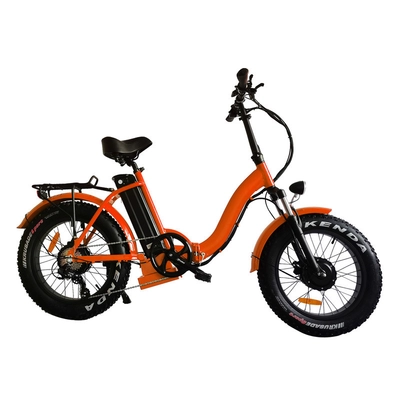
At a glance
- Folding buys footprint rather than portability, because the 25 kg net weight still has to be lifted into a vehicle or up a stairwell.
- The title's 40 mph claim contradicts the table's 45-55 km/h maximum, and the table is the figure to plan around.
- Range of 31-60 km from a 48V 10.4Ah pack is assist-dependent, so validate the lower bound on your own routes before quoting it.
- Ask for the folded envelope and hinge inspection criteria, because foldability is stated in the table but never dimensioned.
Trade terms
- Minimum Order
- 5 Pieces
- Price
- $650.00/Pieces 5-19 Pieces
- Supply Ability
- 3000 Piece/Pieces per Month
Full specifications
Supplier listing data has been normalised into one reference table. Values are shown as listed; confirm every field in the final quotation and specification sheet.
| Parameter | Listing value |
|---|---|
| Certification | ce |
| Model Number | EB-11 |
| Range Per Power | 31 - 60 Km |
| Frame Material | Aluminum Alloy |
| Wheel Size | 20" |
| Wattage | 500w |
| Max Speed | 45-55km/h |
| Voltage | 48V |
| Power Supply | Lithium Battery |
| Motor | 48V500W Rear Motor, Brushless |
| Battery | 48V10.4Ah Lithium Battery |
| Foldable | Yes |
| Charging Time | 6-8 Hours |
| Brake | Disc Brake |
| Tire | 20*4.0 Tire |
| Frame | Aluminum Alloy 6061 |
| Display | LCD |
| Net Weight | 25kg |
| Rated Passenger Capacity | One Seat |
| item | value |
What it is
Almost every folding bike is sold on the fold and judged on the lift, and this one is no exception. The EB-11 folds because its aluminum frame is interrupted by a hinge, and that hinge is what lets a 20 inch fat-tire machine live in a hallway cupboard, a stockroom corner or the back of a small van instead of occupying a parking space. What folding does not change is the 25 kg you move the moment the bike leaves the ground. Read this page as a storage and handling brief rather than a performance sheet: the questions that decide the purchase are where the bike sleeps between trips, who lifts it, and what the packed dimensions actually are.
Then there is the speed question, which this listing gets wrong in a way worth naming out loud. The title promises 40 mph; the specification table gives a maximum of 45-55 km/h, which is closer to 28-34 mph. Those are two different products sold under one headline. Trust the table, because a 48V 500W rear hub motor on a 25 kg chassis is already working hard at 45-55 km/h, and treat the title as marketing residue. The same caution applies to the 31-60 km range claim: a 48V 10.4Ah pack holds roughly 500 watt-hours, and the top of that range assumes light load, low assist and flat ground.
Where this page earns its keep is the fleet, rental and compact-retail use case. A five-piece minimum order and a price step from $650 suits a dealer testing a folder line, a hire operator storing bikes in a small unit overnight, or a shop that demonstrates a single machine and wheels it into the back room afterwards. Certification depends on the actual product model and target market, so the ce entry in the table is a starting question rather than a conclusion. Ask for folded dimensions, hinge inspection criteria and the exact configuration covered by the conformity documents before you commit to a first order.
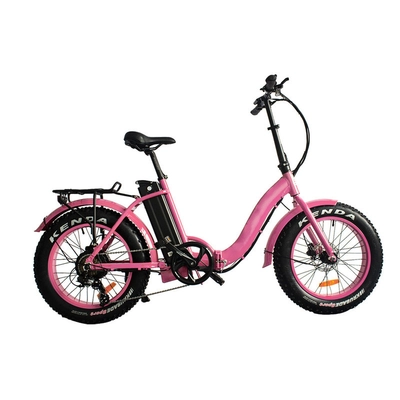
Key questions, answered
The title says 40 mph but the table says 45-55 km/h. Which figure should I plan around?
Plan around 45-55 km/h. Forty miles per hour is roughly 64 km/h, so the headline and the specification table describe two different machines, and the table is the more conservative of the two. On a 500W rear hub motor turning 20 by 4.0 inch tires with a 25 kg chassis, 45-55 km/h is already at the edge of what the drivetrain supports, and reaching it depends on rider weight, surface, state of charge and whether the controller is speed-limited for your market. Before you print any figure in your own listing, run a GPS-verified test on a production sample and quote what you measure rather than what either line claims.
How small does the EB-11 actually pack down, and why is the folded size missing from the table?
The table marks the bike foldable but never states a folded length, width or height, so the storage benefit is asserted rather than dimensioned. Frame geometry, stem type and whether the pedals fold all change the packed envelope, and a 20 inch fat frame running 4.0 inch tires rarely packs as tightly as buyers expect from a brochure. Ask for folded dimensions measured on a production unit, then compare them against the space you genuinely control: a stair cupboard, a van shelf, a booth at a show. Where storage planning drives the purchase, treat the folded measurement as a required document rather than a footnote.
Is a 25 kg folding fat bike realistic to carry up stairs or lift into a car?
A 25 kg net weight is manageable to roll and awkward to lift, and folding does nothing to reduce it. Carrying the frame up more than one flight of stairs is real work, and lifting it into a hatchback or onto a tow-bar rack becomes a two-handed manoeuvre with a bent posture. Where the bike is genuinely moved every trip, the realistic pattern is fold, then wheel it on its own tires or lift it with a second person. If your customers describe their need as daily portability rather than occasional stowage, this chassis will disappoint them and a lighter folder will serve them better.
Frequently asked questions
How much of the stated 31-60 km range can I promise my own customers?
Thirty-one to sixty kilometres is a spread, not a specification, and the upper figure assumes a light rider, flat ground, low assist and a healthy pack. The 48V 10.4Ah battery holds roughly 500 watt-hours, so the range you actually observe depends on how much work the motor does on your terrain. Loaded cargo, cold weather, headwind and continuous throttle all push you toward the lower bound. Quote the conservative end to your own buyers and let the bike over-deliver, and validate the figure on the routes your buyers actually ride rather than on a smooth test track in favourable conditions.
What should I inspect on the hinge and latch before placing a five-piece order?
Work the fold on a production sample rather than a display unit, and cycle it twenty times before you judge it. Check that the hinge closes without force, that the latch engages with an audible and tactile click, and that the secondary safety lock cannot be released by a single accidental movement. Look for paint cracked at the weld, play in the pivot pin, and cable routing that pinches when the frame closes. Then lift the bike by the folded halves and watch for flex. A hinge is the one part of a folder that fails progressively, so it deserves a written line in your incoming quality routine.
Does the ce entry in the table mean this bike can be sold in my market as it stands?
An entry reading ce in a supplier table is a claim about a document, not proof that a specific bike meets the requirements of your market. Certification depends on the actual product model and target market. Electric bicycles are regulated differently for motor cut-off speed, nominal voltage, brake performance and battery transport, and a folder sold with a 500W motor may sit outside the pedal-assist definition in some jurisdictions. Ask for the declaration of conformity, the test reports behind it, and the exact model and battery configuration they cover, then compare those documents against the specification you intend to import and resell.
Where does the 6-8 hour charging window come from, and what changes it?
The six to eight hour window reflects a standard charger working through a roughly 500 watt-hour pack, and the spread comes from charger current and from how deeply the pack was discharged. A higher-current charger shortens the window but adds heat and shortens cell life if used routinely. Charging is also where storage practice matters most: a folding bike is often charged in a hallway or a small storeroom, so confirm the charger's input rating for your market and plan a location with ventilation and a socket that is not in a walkway. Ask the supplier for the charger's rated output current in writing.
The table lists disc brakes without saying hydraulic or mechanical. Does that matter on a folder?
It matters, because the two systems behave differently once a bike is folded and unfolded repeatedly. Mechanical disc brakes are simpler to service in the field and easier for a hire fleet to adjust, but they demand periodic cable tension checks that folding can disturb if routing runs through the hinge area. Hydraulic systems self-adjust and feel more consistent, yet they are harder to bleed on site and less forgiving of a crushed hose. Ask which system is fitted to the production configuration, request the rotor diameter, and confirm that the brake lever and hose survive the fold without being pinched or stretched.
Who should not buy this bike?
Pass on this machine if your buyer's core requirement is carrying it rather than storing it, if the destination market enforces a motor or speed limit that a 500W 48V system cannot be configured to meet, or if you need a documented folded envelope before you commit shelf space. Also pass if you expect one seat to serve two riders, because the rated passenger capacity is one, or if your volumes sit below the five-piece minimum and you cannot evaluate a sample first. The bike rewards buyers who plan storage and verify documents, and it punishes buyers who purchase from a headline figure alone.