
1500W Fast Electric Motorcycle Scooter Fat 0 60 60 65 70 Mph 2 Wheel
This is a 60V, 1500W two-wheel scooter with an 18 * 9.5 inch vacuum tire, built for riders who want a stable seated commute rather than a stand-up deck. It suits short-to-medium urban trips where parking and charging can be planned, and it trades outright speed for a predictable 30-50 km/h working range. The title's mph string is not a performance promise; the spec table is the safer basis for route planning.
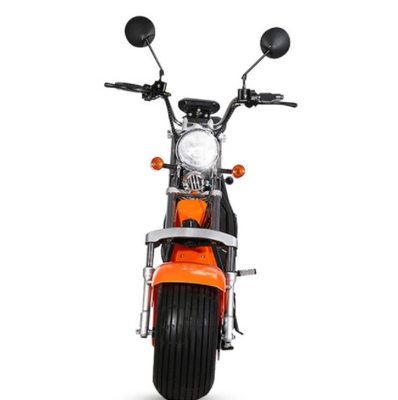
At a glance
- Use door-to-door time, not peak speed, to judge this 1500W scooter: parking, charging and gear-up usually cost more minutes than the motor saves.
- The listing title suggests 60-70 mph, while the table states 30-50 km/h; treat the km/h figure as the engineering claim and ask for written confirmation.
- A 6-8 hour charge window makes workplace or overnight charging access more important than a range claim you cannot verify.
- The non-folding frame and 18 * 9.5 inch tire favour riders with ground-level parking, not commuters who must carry the scooter upstairs daily.
Trade terms
- Minimum Order
- 5 Pieces
- Price
- $495.00/Pieces 5-19 Pieces
- Supply Ability
- 3000 Piece/Pieces per Month
Full specifications
| item | value |
| Combo Set Offered | 0 |
| Place of Origin | China |
| Tianjin | |
| Brand Name | PEB |
| Model Number | EC-02 |
| Power | 1500W |
| Voltage | 60V |
| Certification | Eec |
| Charging Time | 6-8H |
| Foldable | No |
| Max Speed | 30-50km/h |
| Category | Two-wheel Scooter |
| Applicable People | Unisex |
| Color | starry sky |
| Tire | 18 * 9.5 inch Vacuum tire |
| Brand Name | PEB |
| Model Number | Citycoco Scooter |
| Power | 1500W |
| Voltage | 60V |
| Certification | EEC |
| Charging Time | 6h |
| Motor | 1500W Brushless hub motor |
| Max speed | 30-50km/h |
In 30 seconds
For a daily commute, this page should be read as a door-to-door time calculator rather than a speed brochure. The 1500W motor and 60V system point to a 30-50 km/h scooter, which is useful in dense traffic but not a substitute for a highway-capable motorcycle. The title's 60-70 mph string contradicts the table, so plan routes around the km/h figure and request written speed confirmation for your market. Charging takes 6-8 hours, so secure overnight or workplace power before you commit. With a 5-piece minimum, test one configuration in real traffic before scaling a fleet.
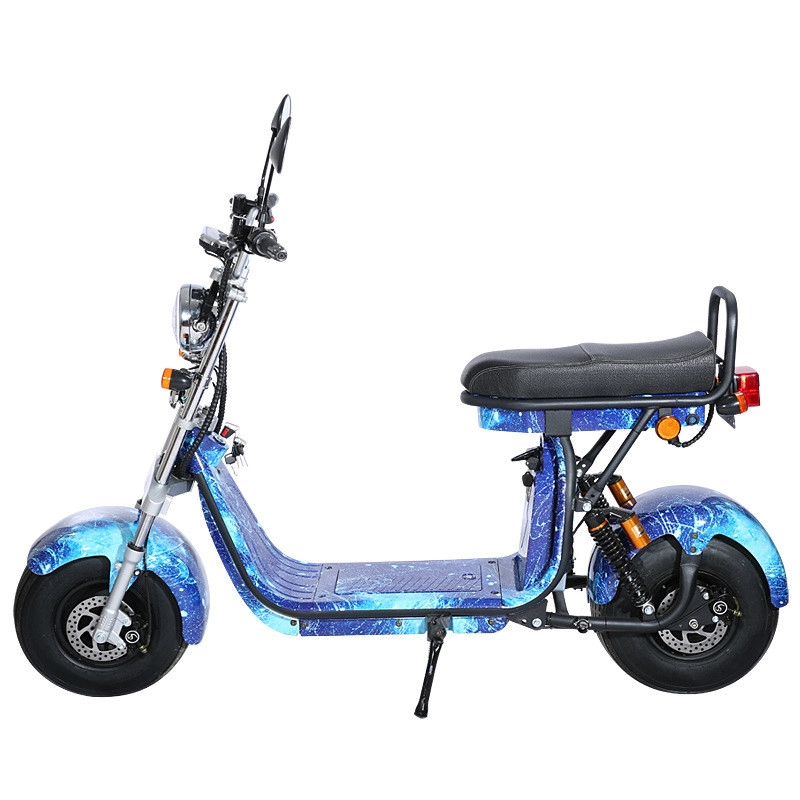
How to choose the right configuration
- Map the real door-to-door trip — Write down the exact origin, destination, parking point and charging point before comparing any specification. Measure the route in minutes at 30-50 km/h, then add walking, locking, helmet storage and any charging stop. A 1500W scooter can feel quick on paper, but traffic lights and parking searches dominate urban door-to-door time. If the route needs sustained speeds above 50 km/h, this EC-02 is the wrong class of vehicle. The exercise also exposes whether the 18 * 9.5 inch tire and non-folding frame suit your final storage location.
- Audit charging and parking access — Confirm where the scooter will charge and who controls that socket. Overnight home charging is the simplest pattern, but workplace charging needs written permission and a safe socket. The table gives 6-8 hours in one row and 6 hours in another, so plan on 6-8 hours and ask which figure applies to the delivered charger. Ask for the charger's input voltage and plug type for your destination, and check whether the battery can be removed for charging; the table does not state this, so get it in writing. Parking access also determines whether the 18 * 9.5 inch tire and non-folding frame are practical.
- Reconcile title against spec table — Put the title beside the specification table and resolve every mismatch before you approve a sample. The title claims '0 60 60 65 70 Mph', but the table gives 30-50 km/h, which is roughly the legal urban band for this class. Do not let a keyword string set rider expectations. Ask the supplier to state the governed top speed, the test condition and the market configuration in writing, then compare that statement with the EEC documentation for the exact model. If the written answer repeats the mph claim, treat the listing as unreliable until explained.
- Verify the 60V system — Treat 60V and 1500W as system-level claims that need matching documentation, not standalone proof of performance. Ask for the battery capacity in Ah or Wh, cell chemistry, BMS limits and charger specification, because voltage alone cannot tell you range or charge time. Request the EEC documentation tied to the exact model and destination market. Certification depends on the actual product model and target market. Also ask which components differ between the 1500W version and any 1000W or 3000W variant sold under the same shell, so you know what you are buying.
- Pilot before committing to five — With a 5-piece minimum, order one sample for a two-week commute trial before committing the rest. Log actual door-to-door time, charging duration, parking effort and rider fatigue on your real route. Check that the delivered scooter matches the quoted 60V, 1500W, 18 * 9.5 inch tire and 30-50 km/h specification, and photograph the label and documentation. Give two or three riders of different sizes a turn, because a seated scooter's comfort depends on ergonomics the table does not describe. Use the trial to decide whether the 6-8 hour charge fits your daily routine.
Setup & daily use
- Measure the commute at the time you will actually ride it, because a route that takes 25 minutes at 07:00 can take 40 minutes in school-hour traffic.
- Ask for battery capacity in Ah or Wh before discussing range, since 60V and 1500W do not reveal how much energy the pack actually stores.
- Confirm the charger plug and input voltage for your destination, then test a full 6-8 hour charge cycle before relying on the scooter for work.
- Always get the EEC documents matched to the exact model and market in writing. Certification depends on the actual product model and target market. Do this before you approve the sample.
- Check the 18 * 9.5 inch tire's replacement availability locally, because a distinctive fat tire can extend downtime if a puncture happens during a work week.
Mistakes to avoid
- Trusting the title's mph string is a costly mistake: the table says 30-50 km/h, so a buyer who plans a 60 mph commute will discover the mismatch only after delivery.
- Comparing only motor wattage ignores the battery capacity, controller settings and vehicle mass that decide real acceleration, range and hill performance, so ask for all four in writing before a trial.
- Assuming a 6-8 hour charge fits any commute is risky; riders without a secure overnight socket or a workplace charging agreement should not treat this scooter as a daily commuter.
- Overlooking the non-folding frame is common in online buying; if the route ends at stairs or a lift-free apartment, the 18 * 9.5 inch tire and seated chassis become a daily handling problem.
Buying checklist
- Map the full route in minutes at 30-50 km/h and add parking, locking, helmet storage and charging time before you compare prices.
- Confirm a secure 6-8 hour charging point at home or work and obtain written permission if the socket is not yours to control.
- Request battery capacity in Ah or Wh, cell chemistry and charger input voltage, because voltage alone does not define range or charge time.
- Resolve the title's 60-70 mph claim against the 30-50 km/h table and keep the written answer with your order documents.
- Check EEC documentation for the exact model and destination market. Certification depends on the actual product model and target market.
- Order one sample against the 5-piece minimum, test it on the real commute for two weeks and inspect the delivered label and tire size.
Frequently asked questions
Does the title's 60-70 mph claim match the 1500W specification?
The title string '0 60 60 65 70 Mph' does not match the specification table, which lists 30-50 km/h for model EC-02. A 1500W, 60V scooter in this body style is normally governed for urban use, not 60-70 mph, and the listing provides no test report to support the higher figures. Treat the km/h row as the engineering claim to verify, ask the supplier for written top speed and test conditions, and compare that statement with the EEC documentation for your market. If the answer repeats the mph string without evidence, price the risk before ordering.
How should a commuter calculate door-to-door time with a 6-8 hour charge?
Start with the route time at 30-50 km/h, then add the walk from parking, locking, helmet and jacket storage, and any queue at a charging point. A 6-8 hour charge usually fits an overnight pattern, not a quick top-up between shifts, so workplace charging needs a written agreement and a safe socket. If your day has no fixed overnight parking, the scooter's charging routine can dominate door-to-door time. Measure the whole routine for one week before you compare it with a bicycle, bus or moped.
What battery details should I request beyond 60V?
Ask for capacity in Ah or Wh, cell chemistry, BMS current limits, charger input voltage and whether the pack is removable. Voltage and motor wattage describe the electrical class, not the energy stored or the range you will get. A 60V, 1500W system can be paired with different pack sizes, so range claims without Wh are not comparable. Ask for the charge time at the stated capacity and confirm whether 6-8 hours refers to a full charge from empty or a partial charge; the table also lists 6 hours once, so resolve that difference.
Is this scooter suitable for a highway or fast arterial commute?
Probably not, based on the 30-50 km/h table. That speed band suits urban streets where traffic moves slowly and parking is frequent, but it is not a highway merging speed. The title's mph figures could mislead a rider into expecting motorcycle-class performance, so verify the governed speed in writing and ride the actual route before committing to five pieces. If your route requires sustained speeds above 50 km/h, choose a vehicle class that matches that duty rather than relying on a keyword-stuffed listing.
What does the 5-piece minimum order mean for a first purchase?
It means you cannot buy a single unit at the $495 price tier unless the supplier agrees to a sample arrangement. A sensible approach is to ask for one evaluation unit, test it on the real commute, then scale to five only after the delivered specification matches the quote. Confirm whether the sample price, freight and spare parts are separate, and inspect the label, charger, tire size and documentation on arrival. The 3000-piece monthly supply ability suggests volume is available, but it does not validate the sample.
Which buyers should avoid this model?
Riders who need 60-70 mph, highway merging, or sustained speeds above 50 km/h should avoid it because the table contradicts the title. Buyers without secure overnight or workplace charging will struggle with a 6-8 hour routine. Anyone who must carry the scooter upstairs should reconsider the non-folding frame. Fleet buyers who cannot inspect a sample before a 5-piece order should also pause. This scooter rewards commuters with predictable parking and charging, not riders who need motorcycle-class speed.
How do I verify the EEC certification?
Ask for the EEC documentation that names the exact model identifier, variant and destination market, then check that the label and VIN on the sample match it. The table lists both EC-02 and Citycoco Scooter as model numbers, so confirm which identifier appears on the document and on the vehicle. A generic certificate image is not enough. Certification depends on the actual product model and target market. Keep the written confirmation with your purchase order and agree which party handles registration or homologation in your country.