
48V 23Ah 48 Volt Bicycle 48V 16Ah 17Ah e-bike 48V 250W Two Wheel
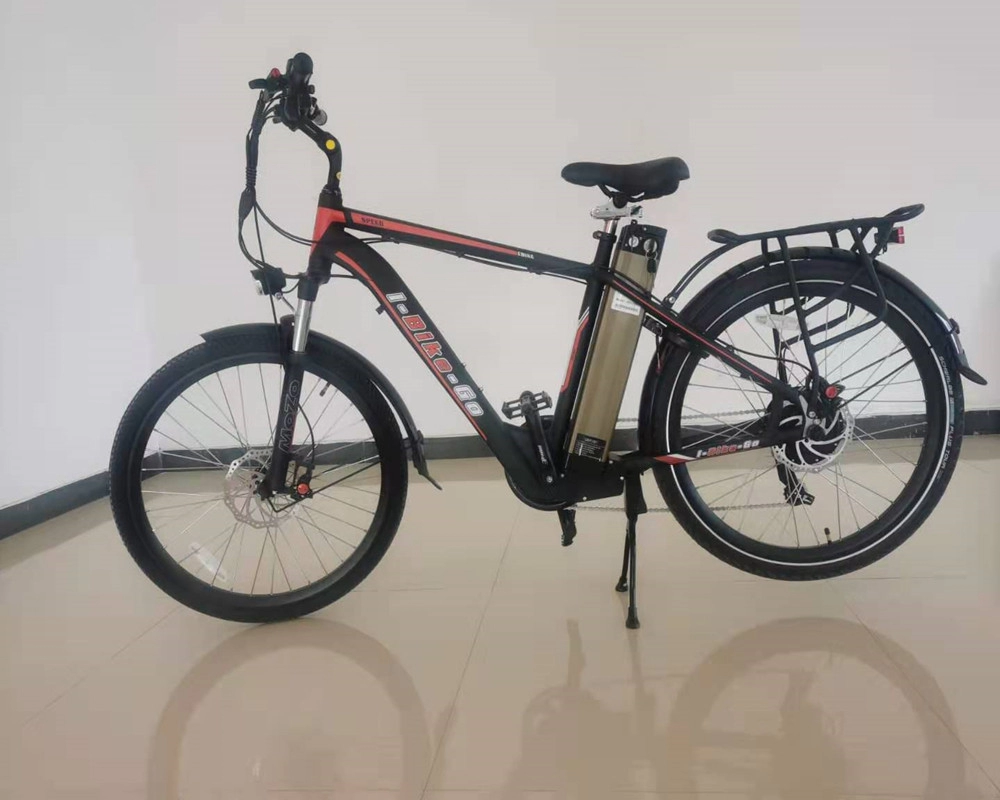
This is a 48V lithium-battery electric bicycle with a 26" wheel platform, aluminum alloy frame, hydraulic brakes, LCD display and MOZO suspension fork, offered at a minimum order of 5 pieces. It suits buyers who need a practical two-wheel commuter or light utility bike and are willing to manage battery charging and range expectations carefully. The central trade-off is that the title advertises several battery capacities and a 250W motor while the specification table states 48V 20Ah and 48V 500W, so battery configuration must be fixed in writing before purchase.
At a glance
- Settle battery capacity first: the title lists 23Ah, 16Ah and 17Ah, while the specification table states 48V 20Ah, so verify the pack in writing.
- Charging time is listed at 6-8 Hours, a routine overnight window rather than a fast-charge claim, so confirm charger voltage and current with the supplier.
- Range per Power is 31 - 60 km, a broad band shaped by rider weight, terrain, assist level and temperature, so plan trips from tested consumption rather than the upper figure.
- Motor Power is listed as 48V 500W while the title says 250W and Wattage says 351 - 500w, so confirm motor and controller configuration before ordering.
Trade terms
- Minimum Order
- 5 Pieces
- Price
- $1,100.00/Pieces >=5 Pieces
- Supply Ability
- 3000 Piece/Pieces per Month
Full specifications
| item | value |
| Combo Set Offered | 0 |
| Wattage | 351 - 500w |
| Voltage | 48V |
| Power Supply | Lithium Battery |
| Wheel Size | 26" |
| Motor | Brushless |
| Certification | ce |
| Frame Material | Aluminum Alloy |
| Foldable | no |
| Max Speed | 30-50km/h |
| Range per Power | 31 - 60 km |
| Place of Origin | China |
| Tianjin | |
| Brand Name | PEB |
| Model Number | EB-15 |
| Style | Standard |
| Rated Passenger Capacity | One Seat |
| Product name | Electric Bike |
| Battery | 48V 20Ah Lithium Battery |
| Motor Power | 48V 500W |
| Color | Black |
| Tire | 26*2.0 |
| Brake | Hydraulic Brake |
| Display | LCD |
| Charging time | 6-8 Hours |
| Warranty | 2years |
| Front fork | MOZO Suspension Fork |
What it is & who it is for
The first decision on this page is not frame style or colour; it is which battery the buyer will actually receive. The page title carries 48V 23Ah, 48V 16Ah and 48V 17Ah, while the specification table states 48V 20Ah Lithium Battery. Those are different pack sizes, and at 48V the amp-hour figure directly affects nominal energy, weight, charge time and realistic range. Treat the specification table as the starting configuration, but do not treat any title figure as a confirmed pack. Ask the supplier to state the delivered capacity, cell configuration, pack dimensions and connector type in writing, and to confirm whether a battery management system is included and which protections it provides.
Charging routine should be designed around the stated 6-8 Hours, not around a fast-charge assumption. For a 48V 20Ah pack, that window is consistent with a normal overnight charge, but the actual time depends on charger current, state of charge, temperature and the charger's termination behaviour. Buyers should confirm the charger input voltage, output voltage and current, whether the charger is included with each bike, and what storage procedure the supplier recommends for long idle periods. A disciplined routine — charge after use, avoid deep discharge, keep the pack within its recommended temperature range and use the specified charger — protects the battery more than occasional top-ups.
Range planning needs the same discipline. The listing gives 31 - 60 km Range per Power, a band wide enough to cover very different riding conditions; it is not a guaranteed distance for every rider. Use the lower end for hilly routes, heavy loads, cold weather or high assist, and use the upper end only after a controlled test on your own route. The motor figures also need reconciliation: the title says 48V 250W, Motor Power says 48V 500W and Wattage says 351 - 500w. Ask for the motor and controller rating that will be shipped, then check that the hydraulic brakes, 26" tires and suspension fork match the intended use.
Key specs explained
- Battery: 48V 20Ah Lithium Battery
- This is the capacity that should anchor the purchase because the title names 23Ah, 16Ah and 17Ah as well. At 48V, a 20Ah pack represents a defined nominal energy level, but delivered capacity, usable depth of discharge and cell quality determine real performance. Ask the supplier to confirm the pack voltage, capacity, cell type, dimensions, weight, connector and whether a battery management system is included. Also ask how the pack is protected against overcharge, over-discharge, short circuit and temperature extremes. Without those answers, the amp-hour number remains a headline rather than a controlled specification.
- Charging time: 6-8 Hours
- The 6-8 Hours figure is best read as a normal charging window, not a promise of rapid turnaround. Actual time will vary with the charger's output current, the pack's starting state of charge, ambient temperature and the charger's termination method. For fleet or shift use, confirm whether a second charger is available and whether the charger is approved for the destination market. Ask for the charger's input voltage, output voltage and current, connector type and operating instructions. A charging routine built around a full overnight window is more predictable than one that relies on squeezing a partial charge into a short break.
- Range per Power: 31 - 60 km
- The 31 - 60 km band is a planning range, not a universal result. Rider weight, terrain, wind, tyre pressure, assist level, starts and stops, load and temperature all move consumption. A heavy rider on hilly ground with high assist may sit near or below the lower figure, while a lighter rider on flat ground with moderate assist may approach the upper figure. Before committing, define a test route, record distance, elevation, load and assist setting, and compare measured consumption with the supplier's claim. Use the result to set a conservative daily route rather than assuming the top of the band.
- Motor Power: 48V 500W / Wattage: 351 - 500w
- The specification table lists Motor Power as 48V 500W and Wattage as 351 - 500w, while the page title says 48V 250W. These are not interchangeable descriptions: they imply different motor and controller configurations, different current draw and potentially different legal classification in the destination market. Ask the supplier to state the continuous and peak ratings that will be shipped, the controller current limit and the throttle or pedal-assist configuration. Confirm the rating on the motor label and the order confirmation. If the intended market restricts motor power, verify the compliant configuration before placing the minimum order.
- Wheel Size: 26" / Tire: 26*2.0
- The 26" wheel and 26*2.0 tire set a useful balance between rolling behaviour, comfort and ride height, but buyers should confirm axle spacing, rim width and tire clearance if they plan to change tires later. Ask whether the supplied tire is intended for paved roads or mixed surfaces, and request the recommended inflation range. Spare tires and tubes should be sourced before the first order if the model is new to your market. The 26*2.0 size is common enough to be practical, yet the exact casing and tread pattern still affect grip, rolling resistance and replacement cost.
- Brake: Hydraulic Brake
- Hydraulic brakes can offer strong, low-effort stopping for a loaded commuter, but they add maintenance and specification checks. Confirm the brake model, rotor diameter, hose length and whether the brakes are supplied bled and ready to install. Ask what service intervals and fluid type the supplier recommends, and whether spare pads and rotors are available. For a 48V bike with a possible 500W motor, braking performance matters as much as acceleration, especially in wet conditions or on hills. A test ride should include loaded stops from the intended cruising speed on a safe surface.
- Frame Material: Aluminum Alloy / Foldable: no
- The aluminum alloy frame and non-folding layout point to a standard two-wheel commuter or light utility bike rather than a compact multimodal design. Aluminum alloy can reduce frame weight and resist corrosion, but the frame's ride feel and durability depend on tube shapes, welding and geometry, which the table does not describe. Confirm frame size, standover height, maximum rider weight and mounting points for racks or mudguards before ordering. Because the bike does not fold, transport and storage need more space; measure doorways, lifts and vehicle racks before committing to the minimum order quantity.
- Max Speed: 30-50km/h
- The 30-50km/h Max Speed range is broad and should be treated as a configuration-dependent ceiling, not a guaranteed cruising speed. Actual speed will depend on motor and controller settings, battery state of charge, rider weight, terrain, wind and local legal limits. Ask the supplier to confirm the factory speed setting and whether it can be adjusted for the destination market. For a commuter or light utility bike, the more useful question is whether the bike can hold a safe, legal speed on the intended route with the planned load. Test acceleration and braking together, not speed alone.
- Certification: ce
- The listing records Certification: ce, but that entry should not be read as blanket approval for every destination. Certification depends on the actual product model and target market. Ask for the certificate scope, the issuing body, the standards covered and whether the 48V 20Ah battery, 500W motor and charger are included in that scope. If your market requires registration, additional marks or importer documentation, confirm those requirements before the order. A single certification field cannot prove compliance for a different configuration or a different country.
- Warranty: 2years
- The listing states a 2years warranty, a term that needs definition before it becomes a purchasing assumption. Ask what the warranty covers: battery capacity retention, motor, controller, display, frame, paint and consumables such as brake pads and tires are often treated differently. Confirm the claim process, who pays return freight, whether the warranty follows the product or the original buyer, and what documentation is required. For a battery-led product, the critical question is the capacity or cycle-life threshold at which a pack is considered defective. Put the agreed terms into the order confirmation.
What to compare before you buy
- Title versus table: the title lists 23Ah, 16Ah and 17Ah plus 250W, while the table states 48V 20Ah and 48V 500W; trust the written order confirmation over the keyword-stuffed title, and make the supplier repeat the delivered configuration in it.
- Battery capacity versus price: the minimum order is 5 pieces at $1,100.00/Pieces >=5 Pieces, so a capacity change from 20Ah to a larger pack can alter both unit cost and supply ability; confirm the quoted pack before comparing offers.
- Charging window versus fleet duty: 6-8 Hours suits overnight charging, but a two-shift operation needs a second charger or a larger pack; do not assume the stated window supports rapid turnaround.
- Range band versus route: 31 - 60 km is wide, so compare the lower end with your longest daily route and reserve margin; a route that fits only the upper end is a route that fails in cold weather or headwind.
- Motor rating versus legality: 250W and 500W are different classifications in many markets, so confirm the factory setting, label and controller limit before ordering 5 pieces; the Wattage 351 - 500w band does not resolve the title's 250W claim.
Common mistakes
- Trusting the title's largest battery figure without reconciling it against the 48V 20Ah specification table is a costly mistake; the delivered pack, not the page headline, determines energy, weight and range.
- Treating the 6-8 Hours charging time as a fast-charge capability can disrupt a shift or delivery schedule; confirm charger current and whether a second charger is needed before you plan daily routines.
- Planning routes at the top of the 31 - 60 km band leaves no margin for hills, cold, load or headwind; set daily distance from the lower end and validate it with a measured test ride.
- Assuming the motor is 250W because the title says so, while the table says 48V 500W, can create a compliance or performance mismatch; confirm the shipped motor and controller rating on the order confirmation.
Buying checklist
- Confirm the delivered battery as 48V 20Ah, or a formally quoted alternative, and list capacity, connector, dimensions and BMS protections in the order confirmation.
- Ask for charger input voltage, output voltage, output current and connector type, and confirm whether one charger is included per bike.
- Set a test route with distance, elevation, rider weight, load and assist level, then compare measured consumption with the 31 - 60 km range claim.
- Verify the motor and controller rating that will be shipped, because the title says 250W while the table says 500W and Wattage says 351 - 500w.
- Request certification scope for the exact model and market. The listing records ce, but Certification depends on the actual product model and target market.
- Confirm commercial terms: minimum order 5 pieces, price $1,100.00/Pieces >=5 Pieces, supply ability 3000 Piece/Pieces per Month, and the 2years warranty definition.
Frequently asked questions
Which battery capacity should I trust: 23Ah, 16Ah, 17Ah or 20Ah?
Trust the written order confirmation, and use the specification table as the starting point. The title lists 48V 23Ah, 48V 16Ah and 48V 17Ah, but the table states 48V 20Ah Lithium Battery. Those capacities are not equivalent, and the delivered pack determines nominal energy, weight, charge time and realistic range. Ask the supplier to confirm the exact pack that will ship, including voltage, capacity, cell configuration, dimensions, connector and whether a battery management system is included. If the supplier cannot state the delivered capacity in writing, treat the title as unverified and do not place the minimum order on that basis.
How should I plan daily charging around the 6-8 Hours figure?
Plan around a normal overnight window rather than a fast charge. The 6-8 Hours figure will vary with charger output current, the pack's starting state of charge, ambient temperature and termination behaviour. For commuter use, charge after the day's riding and confirm that the charger is specified for your mains voltage and includes the correct connector. For fleet or shift use, ask whether a second charger is available and calculate the turnaround from the charger current, not from the headline time. Confirm the charger model, input and output ratings, and storage instructions in the order documentation.
Is the 31 - 60 km range realistic for a 48V 20Ah bike?
It can be realistic as a band, but not as a guaranteed single number. The 31 - 60 km Range per Power depends on rider weight, terrain, wind, tyre pressure, assist level, load and temperature. A heavy rider on hills in cold weather should plan from the lower end, while a lighter rider on flat ground may approach the upper end. Before committing to 5 pieces, run a controlled test on your intended route and record distance, elevation, load and assist setting. Use the measured consumption to set a conservative daily range with a reserve rather than relying on the top figure.
Is the motor 250W or 500W?
The page gives conflicting signals: the title says 48V 250W, the specification table says Motor Power 48V 500W and the Wattage field says 351 - 500w. Those descriptions imply different motor and controller configurations, current draw and possibly different legal classifications. Ask the supplier to state the continuous and peak ratings, controller current limit and pedal-assist or throttle configuration that will actually ship. Check the motor label and order confirmation against that statement. If your market restricts motor power, verify the compliant configuration before ordering; the title alone is not a reliable basis for compliance or performance planning.
What should I verify about the ce certification entry?
Ask for the certificate scope, issuing body, standards covered and the exact model or configuration covered. The listing records Certification: ce, but a single field does not establish compliance for every destination or every battery and motor combination. Certification depends on the actual product model and target market. Confirm whether the 48V 20Ah battery, 500W motor and charger are inside that scope, and whether your market requires registration, additional marks or importer documentation. Keep the certificate and order confirmation together so the delivered configuration can be checked against the claimed scope.