500W 36V Electric Bike 50km H 36V Electric Mountain Bike Eb 15
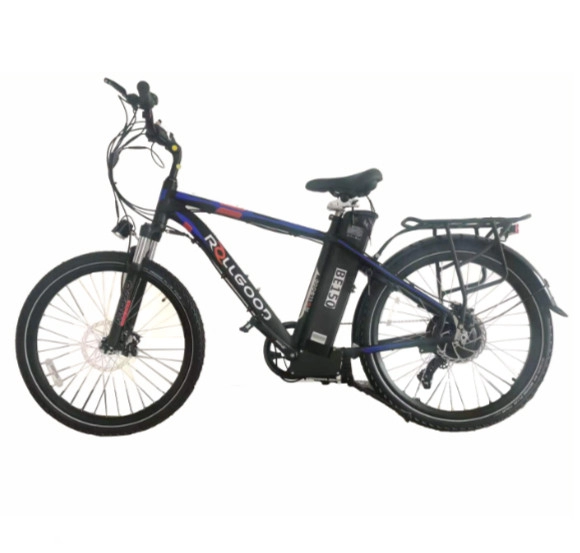
This is a 26-inch aluminium hardtail built around a 48V 500W brushless motor and a 48V 20Ah lithium pack, listed at $950 per piece on a five-piece minimum. It suits a buyer who will actually ride it, because the three-year story here is consumables rather than purchase price. The trade-off is straightforward: recognised component brands at their entry tiers, so the machine is serviceable almost anywhere but will ask for pads, tyres, a chain and eventually a pack.
At a glance
- Budget for wear items from month one, because hydraulic brake pads, 26-inch tyres, a chain and eventually a 48V 20Ah pack dominate three-year cost.
- The title says 36V and 50 km/h, but the specification rows list 48V, a 48v20Ah battery and a 30-50 km/h band, so trust the table.
- Component choice is name-brand entry tier, so replacement parts are widely stocked and any competent workshop can service the bike.
- Ask for consumable part numbers and a spare pad, tyre and chain quote alongside the five-piece order before you commit.
Trade terms
- Minimum Order
- 5 Pieces
- Price
- $950.00/Pieces >=5 Pieces
- Supply Ability
- 3000 Piece/Pieces per Month
Full specifications
| item | value |
| Combo Set Offered | 0 |
| Wattage | 500W |
| Voltage | 48V |
| Power Supply | Lithium Battery |
| Wheel Size | 26" |
| Motor | Brushless |
| Certification | ce |
| Frame Material | Aluminum |
| Foldable | no |
| Max Speed | 30-50km/h |
| Range per Power | 31 - 60 km |
| Place of Origin | China |
| Tianjin | |
| Brand Name | PEB |
| Model Number | EB-15 |
| Style | Standard |
| Rated Passenger Capacity | One Seat |
| Motor | 48v500w |
| battery | 48v20Ah |
| brake | tektre hydraulic brake |
| fork | mozo fork |
| frame | 26 Inches Aluminium Alloy Frame |
| tire | 26*2.0 schwalbe tire |
| saddle | velo saddle |
| stem | promax |
| chain | kmc |
| pedal | wellgo |
Verdict
Buy this if your cost model carries a maintenance line, not if you expect a sealed appliance. Over three years the EB-15 is defined by how hard you ride and how economically you can source pads, tyres, chains and a replacement 48V 20Ah pack, not by the $950 unit price. The mechanical package is coherent: aluminium frame, hydraulic brakes, and branded tyre, fork, chain, saddle and pedals, all serviceable with standard tools and standard spares. The weaknesses are documentary rather than mechanical. The title contradicts the table on voltage and speed, one motor row is duplicated, and no weight figure appears at all. Resolve those three points in writing before ordering, then judge the bike on wear-part pricing, which is where the money actually goes.
What we like
- Hydraulic brakes from a recognised brand mean predictable pad and rotor replacement instead of a sealed unit you cannot rebuild when a lever goes soft.
- The 26-inch wheel running a branded 26*2.0 tyre keeps consumable sourcing simple, because that size remains one of the easiest to buy in volume.
- Standard drivetrain hardware, including a named chain and named pedals, lets a local workshop swap worn parts without waiting on proprietary imports.
- A 48V 20Ah lithium pack gives roughly 960Wh of nominal capacity, enough headroom that you are not draining it to empty on every commute.
- Frame, fork, stem and saddle all come from identifiable suppliers, which makes it realistic to request a full spare-parts list before committing to five units.
What to watch
- The title advertises 36V and a 50 km/h figure while the table specifies 48V and a 30-50 km/h band, so the delivered configuration must be confirmed in writing.
- No weight appears anywhere in the specification table, and that number drives shipping cost, tyre wear and how often the fork needs attention.
- The fork is named but never described as coil or air, so its service interval and seal-kit budget cannot be planned from the listing alone.
- Battery replacement is the largest single three-year cost, yet the listing gives no cycle-life figure, warranty term or cell-level detail to model it.
How it performs
- Motor
- A 500W brushless unit paired with a 48V pack is a modest, durable combination rather than a performance one. The listing names the motor twice, once as Brushless and once as 48v500w, which is duplication rather than two separate motors. For ownership, the relevant fact is that a brushless motor of this class has no brushes to renew and few user-serviceable internals, so a failure usually means replacement rather than repair. Ask whether the drive is a geared hub or a mid-drive, because that single answer shifts your three-year drivetrain cost more than any other line in the table.
- Battery
- The pack is listed as 48V 20Ah lithium, roughly 960Wh nominal. That is generous for a 500W bike, and the practical effect is fewer full charge cycles per year, which is the most effective way to extend pack life without adding cost. Treat the claimed 31-60 km range as a planning envelope influenced by rider weight, terrain, assist level and temperature rather than a guarantee. For budgeting, put two questions to the supplier: cycle life at a stated depth of discharge, and the warranty position on capacity fade, since the pack is the largest replacement line in any three-year model.
- Braking
- Tektro hydraulic brakes are specified in the table as tektre, which reads as a spelling error rather than a different brand, so confirm the exact model. Hydraulic systems reward routine attention: pads and rotors wear predictably, fluid absorbs moisture over time and needs periodic bleeding, and a neglected system costs far more to restore than to maintain. On a 26-inch mountain bike used across mixed surfaces, pad replacement will likely be the most frequent consumable after tyres. Request the pad shape and rotor size at order stage so consumables can be priced locally instead of imported.
- Comfort
- Comfort here is assembled from named parts: a Velo saddle, a Promax stem, a Mozo fork and 26*2.0 tyres. That combination suits upright, mixed-surface riding, and the 2.0 tyre width provides useful cushioning without excessive rolling drag. What the listing never states is frame geometry, standover height or the rider size range, so fit cannot be assessed from the page. If five units will go to several different riders, request a geometry chart and the saddle height range before assuming one frame size covers your team.
- Folding and service access
- The frame is not foldable, which affects ownership in two ways: storage and transport need more space, and there is no hinge to loosen, creak or replace over time. That absence is a maintenance advantage, because folding mechanisms are a common source of play on commuter bikes. The upside continues in the workshop, since a rigid aluminium hardtail has conventional bearing, headset and bottom bracket service points. A local mechanic can handle most of the three-year workload without specialist tooling, provided consumables are sourced correctly at the start.
Who should buy it
- Fleet or rental buyers ordering five or more units who will hold a small spares inventory and absorb predictable consumable cost.
- Riders covering mixed surfaces who want a rigid, serviceable hardtail with branded brakes and tyres rather than an integrated sealed design.
- Buyers with a local workshop stocking 26-inch tyres, hydraulic pads and standard chains, so downtime stays measured in hours.
- Procurement teams that will put the voltage, speed and weight questions to the supplier in writing before releasing the order.
Who should skip it
- Buyers wanting a sealed, maintenance-free commuter with no intention of budgeting for pads, tyres, chain and a replacement pack.
- Anyone relying on the page title alone, because its 36V and 50 km/h claims conflict with the specification table beneath it.
- Operators needing a folding frame for storage or multi-modal transport, since this frame is explicitly non-folding and space-hungry.
Specifications
Full specification table and product data are shown above.
Frequently asked questions
Should I trust the title's 36V and 50 km/h claims, or the specification table?
Trust the table, and put the difference in writing. The title reads 500W 36V Electric Bike 50km H, while the specification rows state 48V, a 48v500w motor, a 48v20Ah battery and a 30-50 km/h maximum speed band. A 36V battery cannot correctly feed a controller and motor configured for 48V, so the two descriptions cannot both apply to the unit you receive. Ask the supplier to confirm nominal voltage and the controller speed setting per destination market, and treat that written reply as the contractual description rather than the headline.
What will three years of ownership cost beyond the $950 unit price?
The purchase price is the smaller part of the model. Consumables dominate: hydraulic brake pads and rotors, 26-inch tyres and tubes, a chain, and eventually a full 48V 20Ah pack. Labour stays modest if you have a local workshop, because the components are standard rather than proprietary. The variable you control is sourcing. Request pad shape, rotor size, tyre model and chain specification at order stage, then price those items locally for five bikes. The pack is the largest single line and the one figure the listing never addresses, so ask for cycle-life and warranty terms.
Is a 48V 20Ah battery realistic for the claimed 31-60 km range?
A 48V 20Ah pack is roughly 960Wh nominal, which is substantial for a 500W motor, so the stated range band is plausible and arguably conservative. Real distance depends on rider weight, terrain, assist level, tyre pressure and ambient temperature, and a mountain bike on mixed surfaces will sit toward the low end. Treat the band as a planning envelope rather than a promise. For procurement, the more useful questions are cycle life at a stated depth of discharge, the warranty position on capacity fade, and whether spare packs can ship with the same order.
What maintenance does the Mozo fork and the hydraulic brake system actually need?
The listing names a Mozo fork without stating whether it is coil or air, and the service schedule differs between the two, so confirm the type first. Coil forks generally need cleaning and lubrication, while air forks need seal and oil service at the manufacturer interval. Tektro hydraulic brakes, spelled tektre in the table, need pad inspection, rotor measurement and periodic fluid bleeding. Neither system is difficult to live with, but both reward adherence to intervals, because neglected hydraulics and dry fork stanchions cost considerably more to restore than to maintain.
Is certification included, and what documentation should I request?
Certification depends on the actual product model and target market. The specification table lists ce, but a row in a table is not a document, and a CE mark carries different implications for a complete e-bike than for an individual component. Before ordering five units, ask which directives or regulations the supplier claims conformity with, request the declaration and the test evidence behind it, and confirm which speed and power configuration the certificate covers, since a 25 km/h build and a 45 km/h build are not the same product.
How should a five-unit buyer plan the spares kit?
Build the list from the table rather than from the brochure. That means hydraulic brake pads and at least one rotor, two 26*2.0 tyres with tubes, a spare chain, and written confirmation of the correct pad shape. Add a spare battery or agree a supply lead time for one, because the pack is the component most likely to end the bike's service life early. Ask whether the supplier can ship a consumable kit with the five bikes, and record part numbers so your workshop can reorder identical items instead of matching by photograph.
Why does the missing weight figure matter for a procurement decision?
Weight is absent from the entire specification table, and it is the number that ties three separate costs together. It determines freight and handling charges on a five-piece shipment, it influences tyre and brake wear rates, and it sets how often the fork and wheel bearings need attention. It also affects rider safety and whether the bike suits the people who will actually use it. Request a verified figure for the complete bike as configured, and ask whether it is measured with or without the battery fitted.