
Rear Hub Motor Folding Portable Electric Bike 48V 500W 20 Tire
This is a 20-inch fat-tyre folder built around a 48V 500W rear hub motor, an aluminium 6061 frame and a 48V 10.4Ah lithium pack, aimed at the rider who folds twice a day and commutes through weather. The rear hub puts drive force where the rider's weight already sits, so traction on wet pavement and loose gravel is more predictable than a front-drive layout. The trade-off is honest: the 20*4.0 Kenda casing that creates that grip raises rolling resistance and helps push net weight to 25kg, and the 500W figure needs verification as continuous rather than peak output.
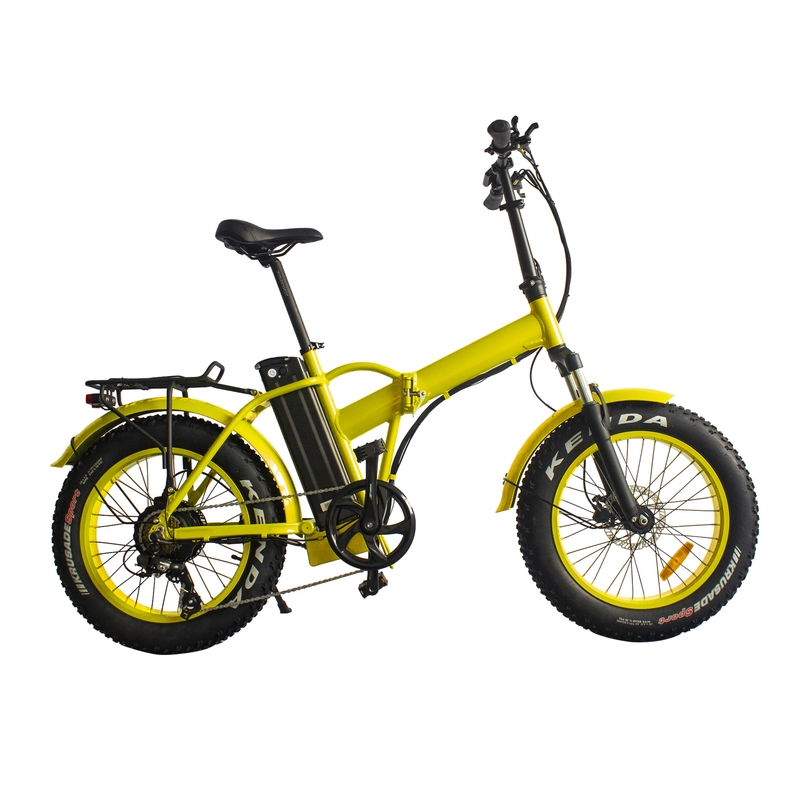
At a glance
- Confirm continuous rated power in writing before ordering, because the listing states 500W without separating sustained output from a short peak figure.
- The 20*4.0 Kenda tyre buys grip and comfort on wet pavement and gravel, but it adds rolling resistance rather than range to the 31-60 km claim.
- A rear hub motor needs little routine work, yet axle nut torque, spoke tension and controller connectors deserve a quarterly check across three years.
- Every fold cycles the latch and the cable runs, so a frame folded twice daily should be inspected for hinge play before the bulk shipment ships.
Trade terms
- Minimum Order
- 5 Pieces
- Price
- $650.00/Pieces 5-19 Pieces
- Supply Ability
- 3000 Piece/Pieces per Month
Full specifications
| item | value |
| Combo Set Offered | 0 |
| Wattage | 500w |
| Voltage | 48V |
| Power Supply | Lithium Battery |
| Wheel Size | 20" |
| Motor | Brushless |
| Certification | ce |
| Frame Material | Aluminum Alloy |
| Foldable | yes |
| Range per Power | 31 - 60 km |
| Place of Origin | China |
| Tianjin | |
| Brand Name | PEB |
| Model Number | EB-10 |
| Style | Standard |
| Rated Passenger Capacity | One Seat |
| motor | 500w rear motor |
| battery | 48V 10.4Ah Lithium Battery |
| foldable | yes |
| Charging time | 6-8h |
| brake | Tektro Disc Brake |
| wheel size | 20*4.0 kenda |
| Frame material | Aluminum Alloy 6061 |
| net weight | 25kg |
| display | LCD |
| Front fork | steel or suspension |
In 30 seconds
Buy this folder if your commute is mixed pavement and gravel, you fold it at both ends of the trip, and you can verify the motor's continuous rating and the fold hardware before committing. Walk away, or ask for a different configuration, if you need a light one-hand carry at 25kg, if your route includes long steep climbs at full load, or if the supplier will only repeat 500W without quoting a sustained figure and a controller current limit. The five-piece minimum at the listed tier suits a small fleet or a shop demo pool better than a single-rider trial, so use one unit as the sample before releasing the rest.
How to choose the right configuration
- Pin Down Rated Power — The specification table lists 500W and repeats 500W as the rear motor value, but it never separates peak from continuous. Continuous rated power is what a motor can hold on a long climb or into a headwind without thermal cutback, and that is the number a daily commute actually depends on. Ask the supplier for the continuous figure in writing and for the controller current limit that enforces it. If the reply only restates 500W, treat the number as a peak claim and plan flatter routes, lighter loads and shorter full-throttle stretches until you have measured the motor's behaviour yourself.
- Match Tyre to Route — The 20*4.0 Kenda casing is the defining choice on this bike, and it should be selected for surface, not for range. Wide, low-pressure tyres float over gravel, bridge expansion joints and wet paint, and they absorb the vibration that makes a short-wheelbase folder tiring. The cost is measurable: more rubber in contact means more rolling resistance, so the fat tyre works against the 31-60 km band rather than extending it. Decide whether your route genuinely includes loose surfaces. If it is clean asphalt with occasional puddles, a narrower tyre on the same frame would return more distance per charge.
- Read the Range Band — A quoted 31-60 km band is a factor-of-two spread, which means the listing is describing two different riders rather than one bike. The upper end assumes a light rider, flat ground, low assist and ideal tyre pressure; the lower end assumes load, hills, headwind and generous use of the higher assist levels. With a 48V 10.4Ah pack and a 20*4.0 tyre, plan your commute against the lower figure and treat anything above it as margin. Measure your actual one-way distance, add a buffer for cold weather and detours, and only then decide whether the pack size suits a full round trip without charging at work.
- Audit the Fold Hardware — A folder that is folded twice a day accumulates roughly seven hundred fold cycles a year, and the latch, hinge and cable runs take all of it. Before you accept a sample, fold and unfold it repeatedly and watch for three things: lateral play at the main hinge, a catch that needs force to seat, and cables that rub or kink at the fold point. Play at the hinge loads the frame tube rather than the latch, which is the expensive failure mode. Ask what latch spares are available and whether the hinge is adjustable. A bike with a serviceable latch is a three-year commuter; one without is a consumable.
- Plan Three Years of Hub Service — A rear hub motor is mechanically simple, and that simplicity is the reason it suits a commuter. There is no external belt or drive-line alignment to chase at the motor itself, but three years of daily use still touches specific parts. Expect to check axle nut torque and re-tension spokes in the first months as the wheel beds in, to inspect the motor connector for water ingress after wet seasons, and to replace Tektro disc pads on a schedule set by your route rather than by the calendar. Bearings in the hub are a longer-interval item and are best assessed by feel during a wheel-off inspection rather than by noise alone.
- Verify Brakes and Fork — Two entries in the table need resolving before purchase. The brake is listed as Tektro Disc, which tells you the brand but not the rotor size or whether both wheels are equipped, so ask. The front fork is listed as steel or suspension, which is not a specification at all but a fork in the road: steel is lighter and simpler, suspension adds front-end weight and a wear item to service on a 25kg bike. Neither is wrong, but you should know which one your five-piece order contains. The table also records a CE entry; a table field is not a certificate. Certification depends on the actual product model and target market.
Setup & daily use
- Set the 4.0 Kenda tyres to a pressure matched to your load, because soft fat tyres absorb pavement well but raise rolling resistance and draw down the 48V 10.4Ah pack faster.
- Charge within the stated 6-8h window and store the pack part-charged indoors, since repeated empty-to-full charging shortens lithium service life more than partial top-ups do.
- At 25kg the bike is a deliberate two-hand lift, so scout a ground-floor storage spot and rehearse the fold before committing to a stair or train commute.
- Ask which fork ships with your order, because the table offers steel or suspension and the two change front-end weight, ride feel and spare-part sourcing.
- Use the five-piece minimum to build a mixed batch where possible, and keep one spare fold latch plus a set of Tektro pads on the shelf through the first year.
Mistakes to avoid
- Assuming the 4.0 fat tyre extends range is the most common error on this configuration, because the wider casing adds rolling resistance, so plan around the lower end of the 31-60 km band rather than the upper.
- Treating the listed 500W as continuous rated power leads to thermal cutback on long climbs, so request the sustained figure and the controller current limit in writing before you commit to a fleet order.
- Ignoring fold-latch wear on a bike folded twice a day lets hinge play develop quietly, and play at the hinge transfers stress into the frame tube instead of the replaceable latch.
- Accepting a CE field in a specification table as proof of conformity is a paperwork shortcut, so request the declaration and test scope that match the exact model and the market you intend to import into.
Buying checklist
- Obtain the continuous rated power of the 500W rear motor in writing, together with the controller current limit that governs sustained output.
- Request tyre pressure guidance for the 20*4.0 Kenda casing at your rider weight, plus the correct spare tube size for that wheel.
- Fold and unfold the sample repeatedly and record any play at the main hinge, stiffness in the catch plate or cable rub at the fold point.
- Confirm whether the front fork on your order is the steel version or the suspension version, and price the service parts for whichever ships.
- Ask for battery documentation covering the 48V 10.4Ah pack, including the charge window, storage guidance and expected capacity behaviour in cold weather.
- Release the bulk shipment only after one unit from the five-piece minimum has completed twenty fold cycles and a loaded wet-surface braking test.
Frequently asked questions
Is the 500W figure on this listing a peak value or a continuous rating?
The specification table states 500W and repeats 500W for the rear motor, but it never distinguishes peak from continuous, so the honest answer is that the listing does not say. Continuous rated power is the output the motor can sustain on a long climb or into steady wind without thermal cutback, and it is the figure a daily commute depends on. Ask the supplier to state the continuous rating and the controller current limit in writing. If the reply only repeats 500W, plan for shorter full-power bursts and lighter loads, and treat 500W as a peak claim until evidence says otherwise.
Does the 20*4.0 fat tyre give more range than a narrower tyre would?
No, and this is where buyers most often misread the specification. A wider tyre puts more rubber in contact with the road, which improves grip on wet pavement and gravel but increases rolling resistance, and that resistance is drawn from the same 48V 10.4Ah pack. The listed band of 31-60 km should therefore be read against the fat tyre rather than in spite of it. Fat tyres do help indirectly on rough surfaces by reducing vibration losses and rider fatigue, but on smooth asphalt a narrower casing of similar construction would return more distance per charge.
What does rear hub motor maintenance actually involve across three years of commuting?
A rear hub motor avoids the alignment and wear items of an external drive at the motor itself, so routine work is modest but not zero. In the first months, expect to check axle nut torque and re-tension spokes as the wheel beds in. Seasonally, inspect the motor connector for water ingress, check the Tektro disc pads against your route rather than the calendar, and feel the hub bearings during a wheel-off inspection. Keep the controller connectors dry and seated. Over three years the replaceable items are pads, spokes and tyres; the hub itself is usually the last thing to need attention.
How does a rear hub motor behave on wet pavement and loose gravel?
A rear hub motor applies drive force where the rider's weight already sits, so the loaded rear contact patch resists wheelspin better than a front-drive layout on wet paint, metal covers and damp asphalt. On loose gravel the benefit holds on gentle gradients, but on steep climbs with a light rider the rear wheel can still break traction, and recovery means shifting weight back rather than steering. Braking balance matters too: the front wheel does most of the stopping, so wet-surface braking should be earlier and straighter. Ride the sample on the surfaces you actually commute over before releasing a bulk order.
How should I inspect the fold latch on a bike that gets folded twice a day?
Fold cycles are the real duty test on any folder, and two folds a day comes to roughly seven hundred a year. Open and close the bike at least twenty times on the sample and watch for lateral play at the main hinge, a catch that needs force or a particular angle to seat, and cables that rub or kink at the fold point. Play at the hinge is the concerning finding, because it loads the frame tube instead of the latch. Ask whether the hinge is adjustable and what latch spares exist. A serviceable latch turns the bike into a three-year commuter; a sealed one makes it a consumable.
Is this folding electric bike CE certified?
The specification table carries a CE field, but a field in a table is a claim rather than a certificate, and it does not tell you which standard was tested or which model was covered. Certification depends on the actual product model and target market. Before importing, ask for the declaration of conformity, the test scope, the model designation it names, and confirmation that the 48V 10.4Ah battery and charger are included in that scope. If your destination market requires additional national marks or battery transport documentation, raise those requirements with the supplier at quotation stage rather than after the shipment is booked.
Why is the range listed as 31-60 km, and which end should I plan around?
The band spans almost a factor of two because it is describing different riders and conditions rather than one measured result. The upper end assumes a light rider, flat ground, low assist and correctly inflated tyres; the lower end assumes load, hills, headwind and generous assist on a 20*4.0 fat casing. With a 48V 10.4Ah pack, plan your commute against the lower figure, then add a buffer for cold weather, detours and battery ageing. Measure your actual one-way distance before ordering. If the round trip exceeds the lower end of the band, plan to charge at work or specify a larger pack.